
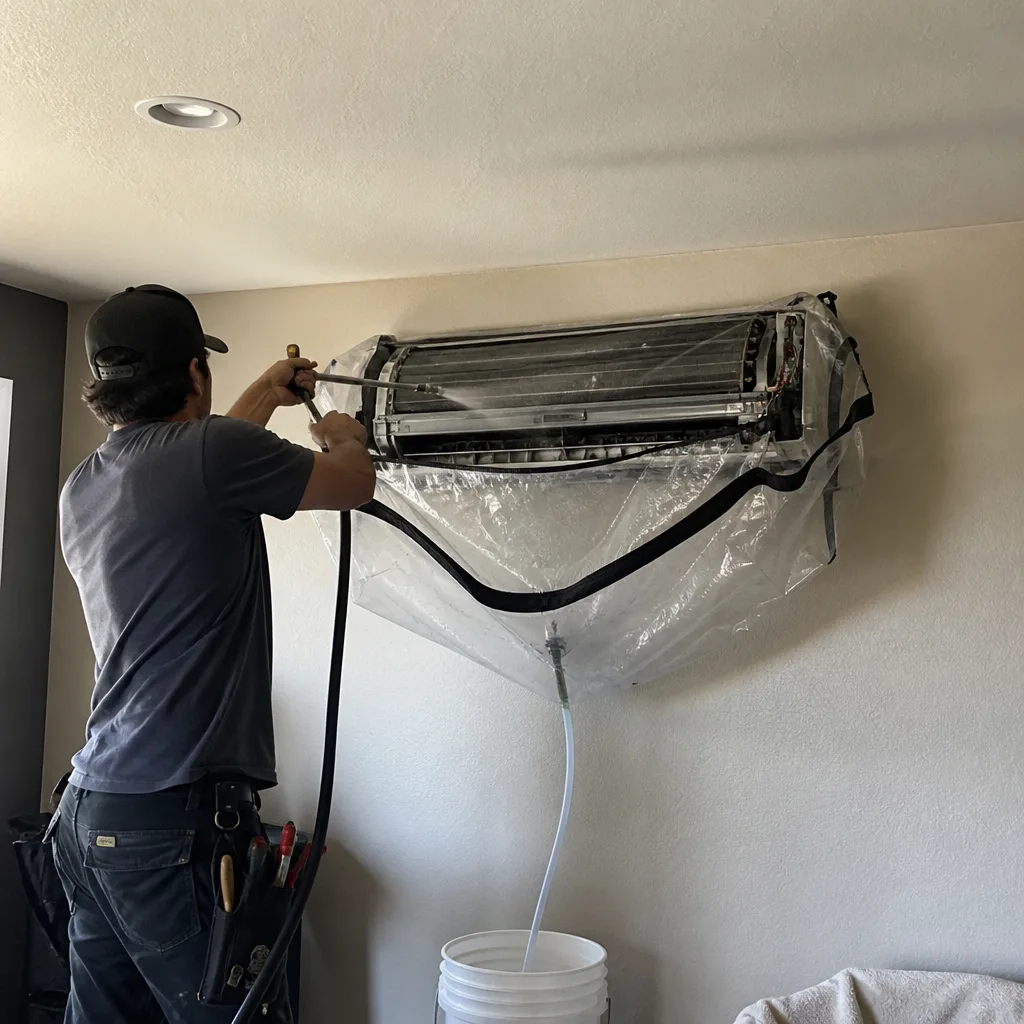
Last updated November 24, 2026
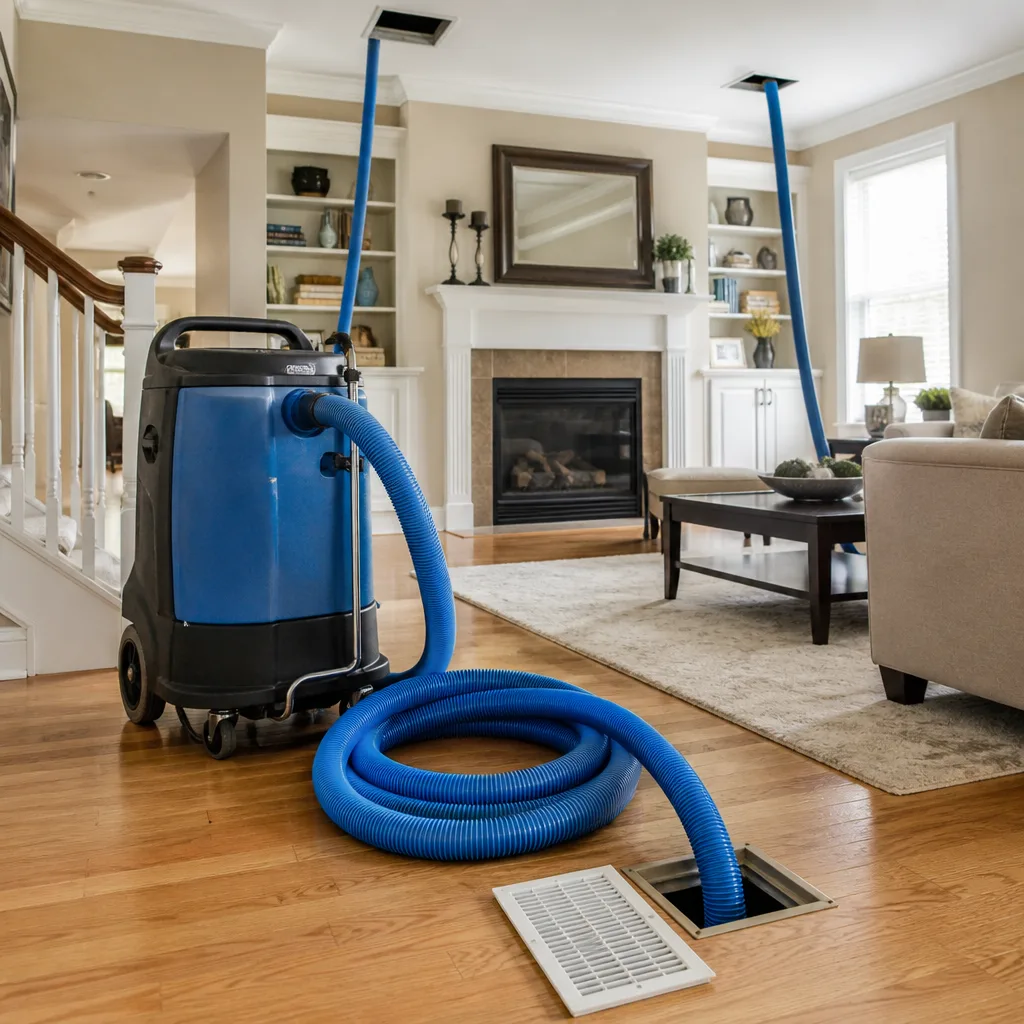 Whole-home duct cleaning
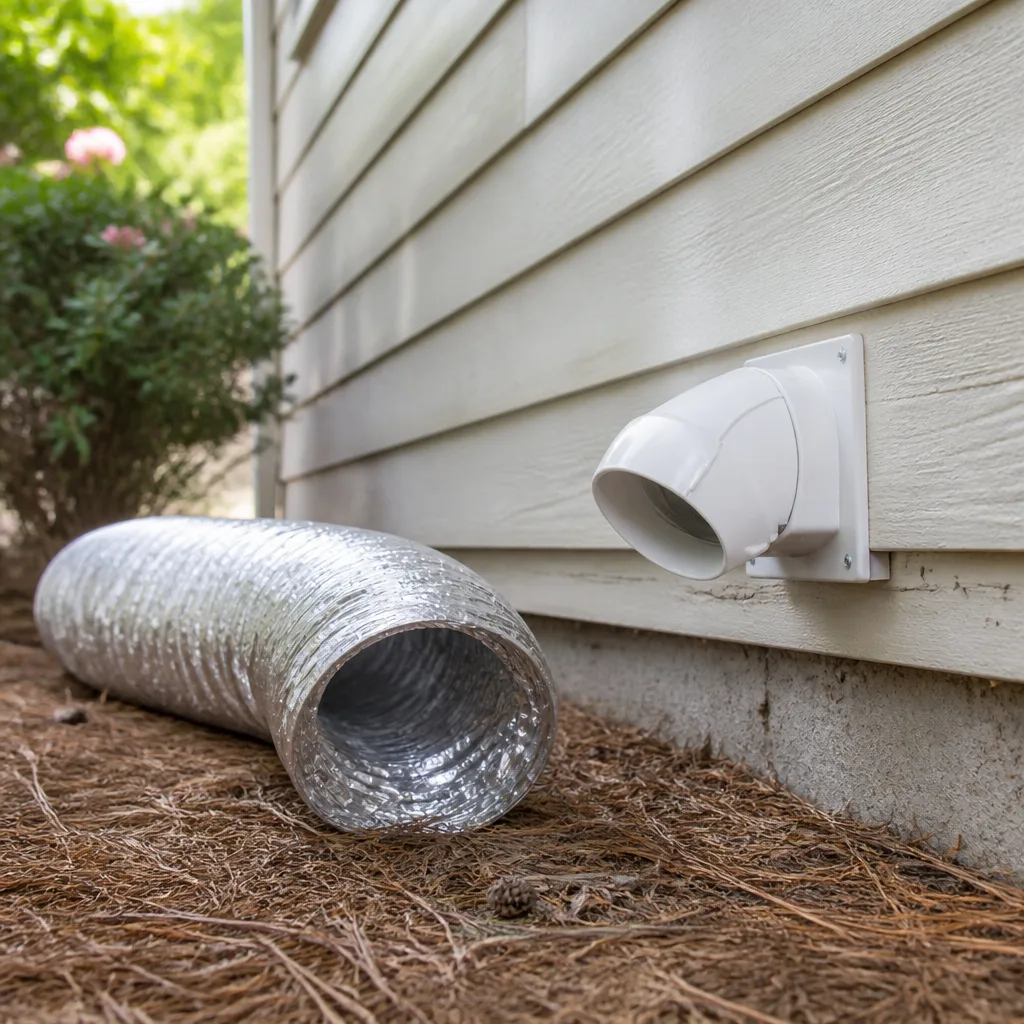 Dryer vent cleaning
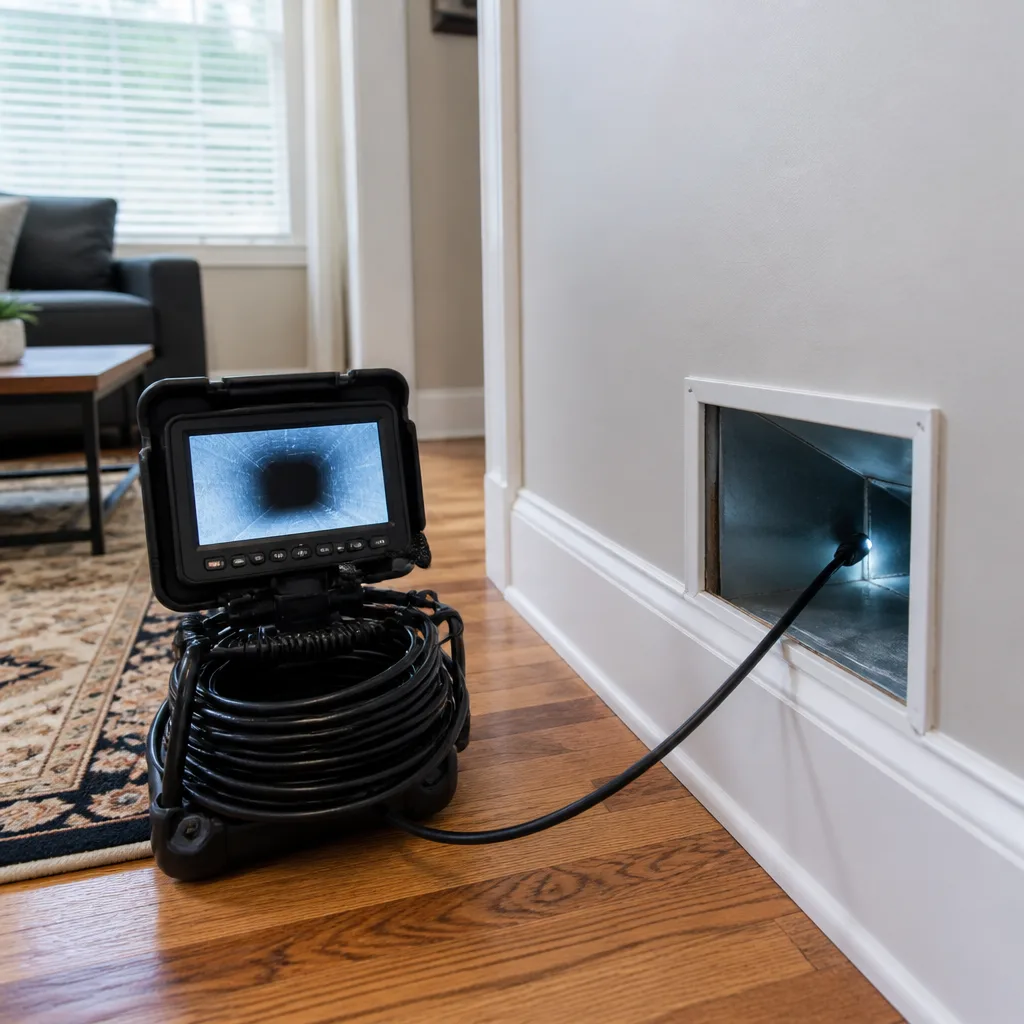 Camera inspection
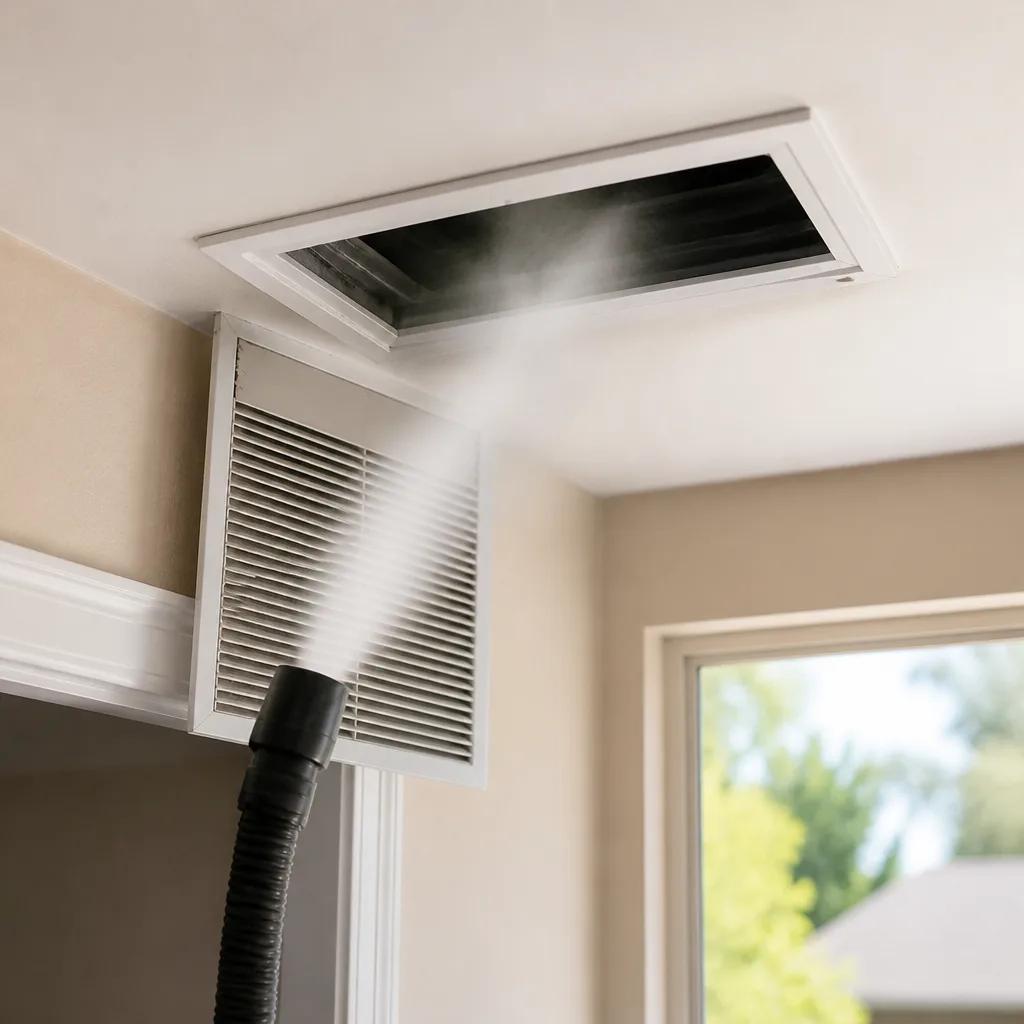 Sanitizing & deodorizing
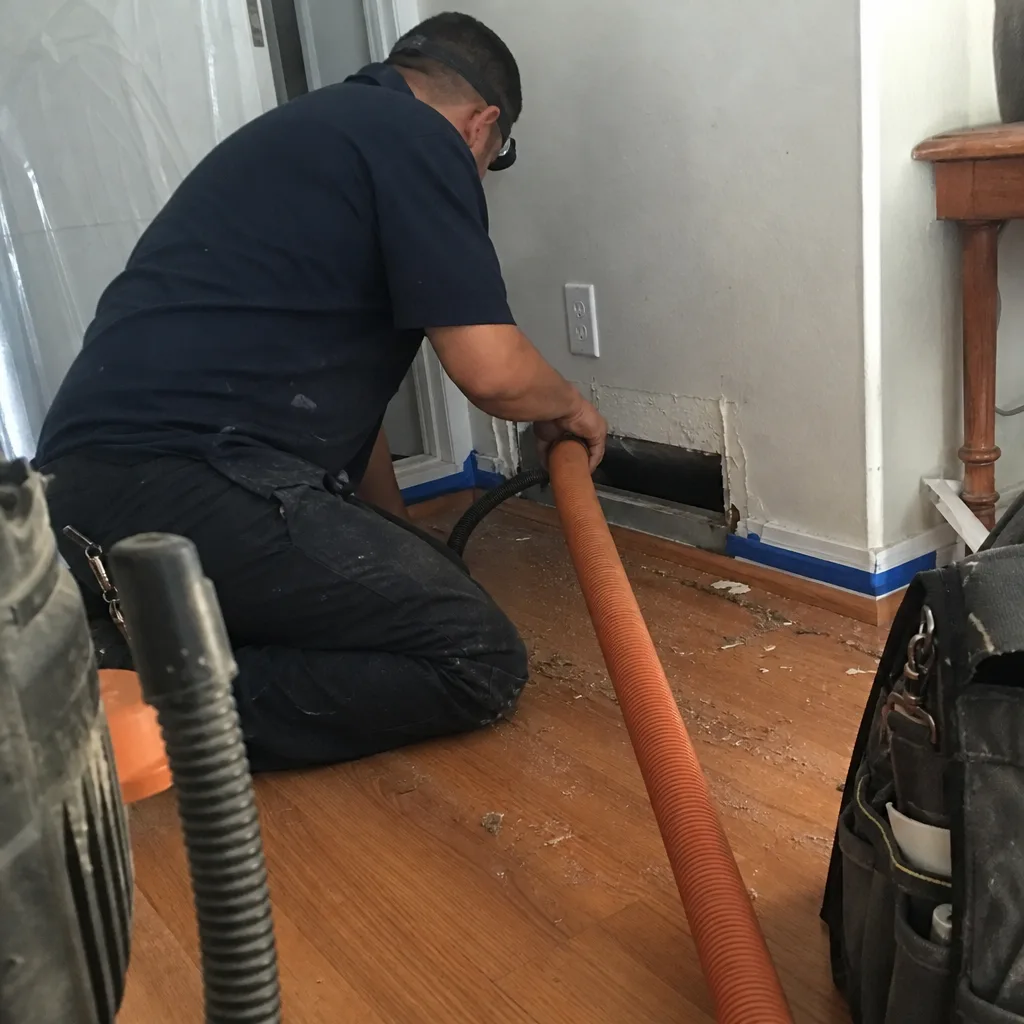
Whole-system duct and dryer vent check with before-and-after photos - you see exactly what came out of your vents
That "$99 whole-house special" is a bait ad - the real number appears once they are in your hallway, or the "clean" is a shop-vac at the register. We photograph the inside of your ducts before and after instead.
Air Duct Cleaning Maintenance Checklist for Huntington Beach Homeowners
Most duct maintenance checklists floating around online were written for a national audience and treat every house the same. They tell you to swap the filter every 90 days, vacuum the registers when they look dusty, and call someone if things get bad. That schedule assumes a climate and a housing stock that isn’t yours. A home near the pier takes on a different mix of airborne particulate than a house in a dry inland valley, and the checklist in your hand probably wasn’t written with that in mind. This guide gives you a maintenance routine calibrated to Huntington Beach: what to check monthly, quarterly, and yearly, what a bad register actually tells you, how to log duct condition so a technician can spot trends, and the moments when a DIY look becomes a call for professional air duct cleaning.
Quick Answer
A practical air duct maintenance checklist for Huntington Beach homeowners covers three rhythms: a monthly filter and register check, a quarterly deeper visual inspection of the supply and return vents, and an annual professional evaluation of the full system. The work itself is small and repeatable, but the point is consistency and record-keeping so you can tell a normal dusty week from a developing duct problem. When supply registers show streaks, musty odors persist, or a renovation or wind event coats the house in fine dust, that’s the trigger to schedule a full cleaning rather than keep wiping surfaces.
Styles & brands we work with
- Whole-home duct cleaning
- Dryer vent cleaning
- Camera inspection
- Sanitizing & deodorizing
Table of Contents
- The Three-Rhythm Maintenance Calendar
- How to Read Your Supply and Return Registers
- Keeping a Duct Condition Log That Actually Helps
- Leaks, Sealing, and Why Cleaning Alone Isn’t Enough
- Your Dryer Vent Belongs on the Same Checklist
- The Post-Event Checklist: Santa Ana Winds, Smoke, Renovations
- When a DIY Check Becomes a Professional Trigger
- Common Mistakes to Avoid
The Three-Rhythm Maintenance Calendar
Think of duct care in three loops. The monthly loop is fast, the quarterly loop is longer, and the annual loop is the deep reset. Splitting the work this way keeps any single session short enough that you’ll actually do it. That’s the whole point: a checklist you abandon after month two doesn’t help you understand your house.
Monthly (about 10 minutes)
- Pull the return filter and hold it up to a light. If you can’t see through it, change it. A 90-day national rule is a rough average; in Huntington Beach homes with pets, nearby construction, or open windows, monthly inspection is the safer check.
- Wipe a finger across one supply register grille. Note whether you get light gray dust, dark sticky film, or grit. Write down what you see.
- Check return registers for buildup around the frame, not just in the filter slot.
- Sniff near a couple of registers with the system running. Any musty or sour note is worth logging.
Quarterly (about 30 minutes)
This is where you look a layer deeper than the grille.
- Remove two or three supply registers and use a flashlight to look as far down the duct as you can see. Note the color and texture of the film on the metal. Uniform light dust is normal. Streaks, blotches, or fuzzy growth are not.
- Inspect the return plenum edge for gaps where the duct meets the air handler cabinet. Gaps mean air is being drawn from the attic or garage space instead of your living room.
- Check that every register is still securely fastened and the louvers move freely.
- Look at the outdoor condenser coil for lint and debris; a clogged coil makes the blower work harder and pulls more dust through the system.
Annually (about an hour plus a professional visit)
- Do a full walkthrough of every register in the house with a notepad, recording the same observations as the quarterly check.
- Inspect accessible duct connections (usually in the attic or crawlspace) for detached sections, torn insulation, or taped joints that have lifted.
- Schedule a professional evaluation of the full duct system, including the parts you can’t see.
- Review the year’s log and look for a pattern: are two or three registers consistently worse? That’s a duct-level clue.
How to Read Your Supply and Return Registers
Registers are your duct system’s diagnostic surface. What you see there tells you whether a problem is a filter problem, an airflow problem, or a duct-interior problem. A filter change fixes dusty air from a dirty filter. It does nothing for dusty air chasing a leak downstream of the filter. Learning to tell the difference saves you from repeated filter swaps that never solve anything.
What each pattern usually means
- Uniform light gray film: Normal accumulation. Vacuum the grille and move on.
- Dark streaks radiating outward from one corner of a register: Air is escaping at that corner and pulling house dust against the grille. Often a loose boot or a gap around the frame.
- Gritty residue (not just dust): Particulate that’s larger and heavier than normal dust. Frequently shows up in Huntington Beach homes after windy events or nearby construction and typically needs a full cleaning, not a wipe.
- Musty or sour odor at one register: Moisture is present somewhere in that run of duct. This is a professional trigger, not a filter issue.
- Noticeably weaker airflow at one register: A partial blockage or a disconnected duct section upstream.
- Visible fuzzy growth: Stop and call a professional. Do not try to scrub it out from the register opening; disturbed growth releases spores into the airstream.
Keeping a Duct Condition Log That Actually Helps
A technician only sees a snapshot. If you hand them a log, they see a trend, and a trend changes the diagnosis. A register that’s been getting progressively worse over eight months points at a different cause than a register that got bad in a week after a wind event. Keep the log simple enough that you’ll maintain it.
The format that works
Use a single notes file on your phone or a notebook clipped inside the return grille access panel. Each entry gets four fields:
- Date.
- Register name (kitchen supply, master return, etc.) – name them once at the start and reuse the labels.
- Observation using consistent wording: light dust, dark streaks, grit, weak airflow, odor, none.
- What you did (vacuumed, changed filter, nothing).
Add one line any month that something unusual happens outside the house: a renovation, a windy week, smoke advisories, a new pet. Those events correlate with what shows up at the registers, and when a technician has that context they can tell you whether a recurring dust issue traces to a leak, a filtration gap, or genuine debris in the ducts. That record is exactly the kind of documentation that separates a well-maintained home from a guess.
Leaks, Sealing, and Why Cleaning Alone Isn’t Enough
A duct cleaning pass removes the debris inside the ducts, but it doesn’t close the gaps that let new dust in. In many Huntington Beach homes we look at, the debris load is only half the story; the other half is leakage at the joints, boots, and connections. Cleaning without sealing is like mopping a floor that still has a running tap. If you want lasting air-quality gains, the sequence matters.
Where leaks hide
- Joints where duct sections meet in the attic or crawlspace.
- The connection between the duct boot and the register frame.
- Where the return plenum attaches to the air handler cabinet.
- Taped seams that were sealed with standard duct tape and have since lifted (mastic or foil tape holds up far better).
- Flex duct that’s been routed with a sharp bend or bent back on itself, causing a partial collapse at the connection.
Each of those spots leaks conditioned air into an unconditioned space. That costs you airflow at the register, and it also pulls outside dust into the system whenever the pressure differential flips. The fix is straightforward: after a cleaning, the same visit should include inspecting every accessible joint, sealing the leaks, and reapplying a protective treatment to the interior surfaces so the duct stays cleaner between services. Our technicians treat cleaning, sealing, and sanitizing as one job, not three. When a run of duct can be repaired rather than replaced, that’s the better outcome for your house and your wallet, and it’s why duct repair and sealing belongs on your checklist, not just a cleaning.
Your Dryer Vent Belongs on the Same Checklist
Most air duct checklists handle the HVAC system and quietly skip the dryer vent. That’s a gap worth closing. A dryer vent is a duct too, with a lint load, and lint is what catches fire. Cleaning it on a schedule is one of the least glamorous maintenance tasks in the home and one of the more useful.
Monthly dryer vent tasks
- Clear the lint screen before every load (simple, but the number-one prevention step).
- Feel the outside vent flap while the dryer runs; confirm it opens freely and pushes strong, warm air.
- Look at the wall behind the dryer for lint accumulating around the duct tape or clamp.
Quarterly and annual dryer vent tasks
- Disconnect the dryer and inspect the duct run for kinks, crushed sections, or long runs with too many elbows.
- Reach into the wall-side connection with a vacuum attachment and clear visible lint.
- Schedule a full dryer vent cleaning once a year, more often in a laundry-heavy household.
For a deeper look at why this matters and how a proper cleaning is done, our page on dryer vent cleaning covers the whole process. The takeaway for this checklist is simple: any home maintenance rhythm that covers your HVAC ducts should cover your dryer vent in the same month.
The Post-Event Checklist: Santa Ana Winds, Smoke, Renovations
Some duct problems don’t develop on a schedule; they arrive with an event. Huntington Beach gets its share of days when the outside air is doing something unusual, and the duct system is where that air ends up. After any of the events below, run through this short checklist instead of waiting for the quarterly session.
After a Santa Ana wind event
- Check the return filter the same day. Wind events carry a lot of fine particulate; you may need to change it within 48 hours rather than at the normal interval.
- Wipe down supply registers in the rooms nearest windows to see how much grit landed.
- Note the observation in your log with the date of the event. A pattern of grit after each wind event tells a technician something about infiltration.
- If the grit film is heavy at multiple registers, schedule a cleaning and a leak inspection together.
After heavy smoke days
- Change the filter and inspect the return grille for a film that looks oilier than usual.
- Check that filters fit tightly; a loose filter lets smoke particles bypass it entirely.
- If the house still smells smoky after a filter change, the ducts are holding residual particulate and a professional cleaning is warranted.
After a renovation
- Change the filter within 48 hours of the tear-down phase, and again after the drywall phase.
- Inspect every register for construction dust film, and don’t just wipe the grille; check the duct interior with a flashlight.
- Ask whoever is working on the renovation whether the returns are covered during the messy phases. A simple plastic covering saves a lot of cleanup.
- Schedule a professional cleaning after the renovation is finished. Drywall dust is fine and abrasive, and it doesn’t respond to filter changes once it’s inside the ducts.
This is where having the professional conversation early pays off. A short HVAC cleaning call after the renovation, combined with filter and register checks, keeps the dust from cycling through the system for the next several years.
When a DIY Check Becomes a Professional Trigger
One of the gifts of owning a checklist is that it tells you when to stop checking and start calling. Some problems are yours to handle; others are symptoms of a duct-level issue that a filter swap can’t touch. This list is the line between the two.
Book a professional inspection when any of these is true
- You see fuzzy growth or visible mold at a register or duct opening.
- A musty or sour odor persists across multiple rooms after filter changes.
- Two or more registers show dark streaks and heavy grit film simultaneously.
- Airflow at several registers has dropped noticeably over a few weeks.
- Your log shows grit or dust returning within days after a full wipe-down of the registers.
- A renovation or wind event left heavy visible dust in the ducts.
- You notice warmer, dustier air coming from one specific room, suggesting a leaking run of duct into an attic or crawlspace.
- A dryer vent has gone more than a year without a cleaning in a laundry-heavy household.
Before you call, get your log out. The date-stamped observations you’ve kept are far more useful to a professional than “the air feels bad lately.” That record lets the technician plan the right equipment and the right scope, whether the job needs a straightforward cleaning or a cleaning plus repair and sealing. When a Huntington Beach homeowner hands us a log with six months of observations, the walkthrough goes faster and the estimate is more accurate.
Common Mistakes to Avoid
- Treating a 90-day filter rule as gospel. Huntington Beach homes see more airborne particulate than the national average in windy months. Check the filter monthly for the first year, then set an interval based on what you actually see.
- Wiping the grille and calling it done. A clean grille over dusty ducts looks fine and behaves badly. Check inside the duct with a flashlight, not just the visible surface.
- Skipping the log. Without a record, every check is a fresh guess. With a record, patterns emerge that a technician can actually diagnose.
- Cleaning but not sealing. A cleaning pass on a duct system that still has leaks is temporary. Seal the gaps that let new debris in.
- Ignoring the dryer vent. It’s part of the same system, and lint buildup is a fire risk that duct cleaning alone doesn’t address.
- Falling for a coupon-and-then-haggle service. If a quote requires a technician to “find” problems after arrival to justify the price, the original estimate wasn’t real. Insist on a flat price per system agreed before work starts.
- Waiting for a “problem” before scheduling any professional evaluation. An annual walkthrough catches leaks early, when they’re cheap to fix, rather than after the debris load has grown into a full remediation.
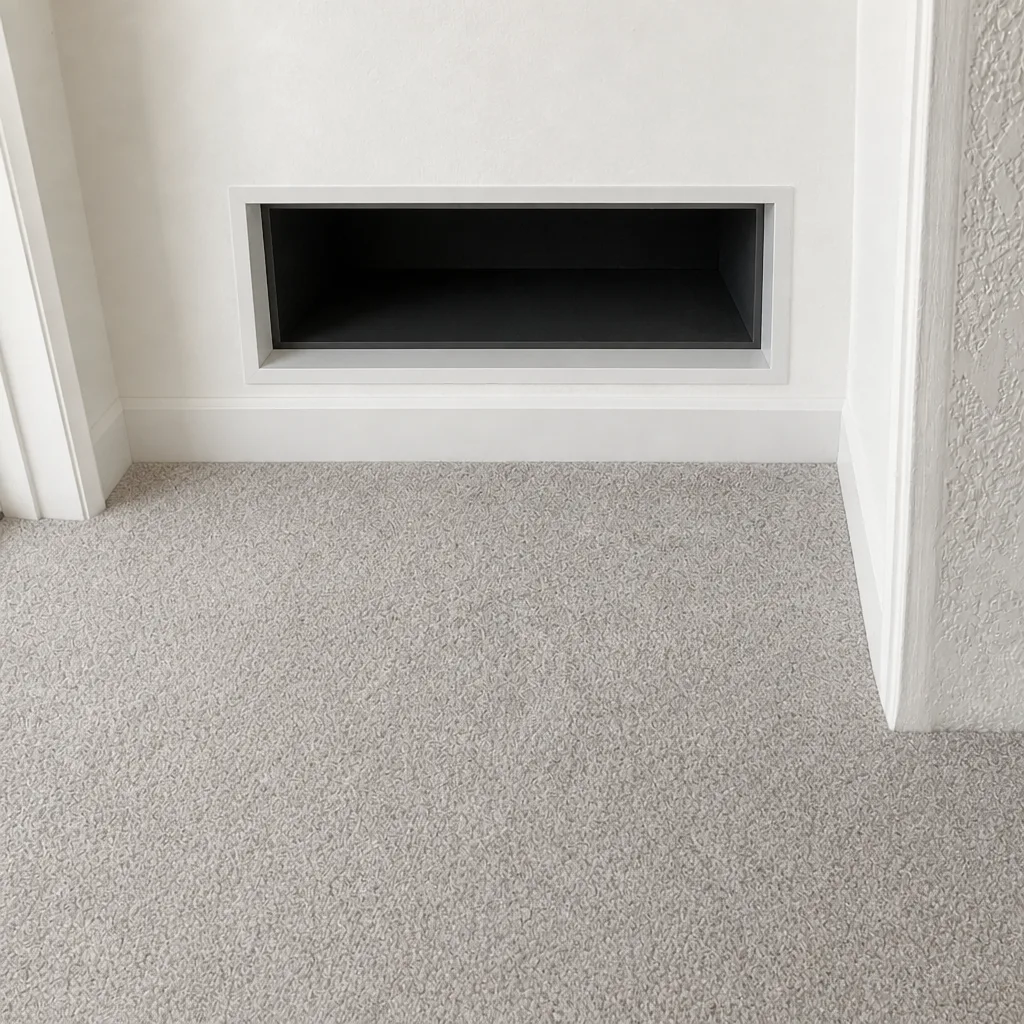
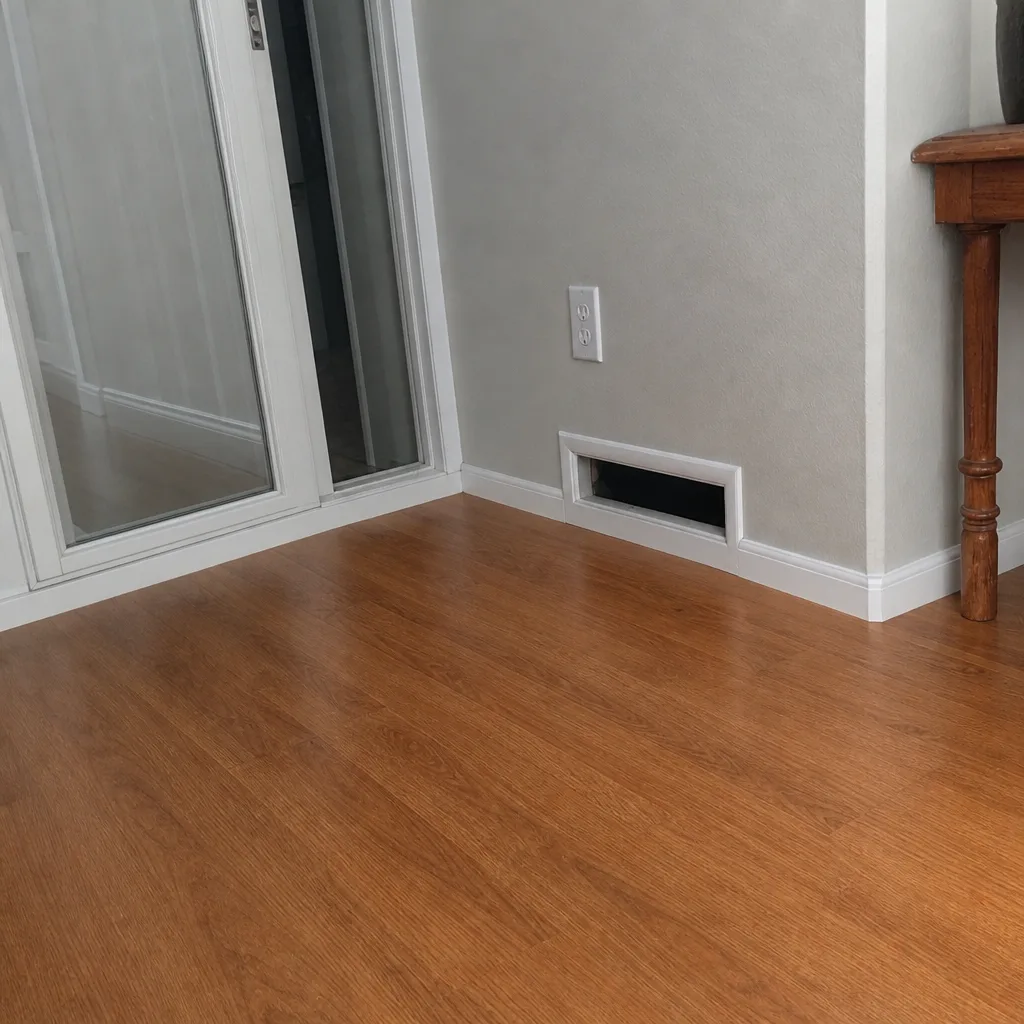
See the difference
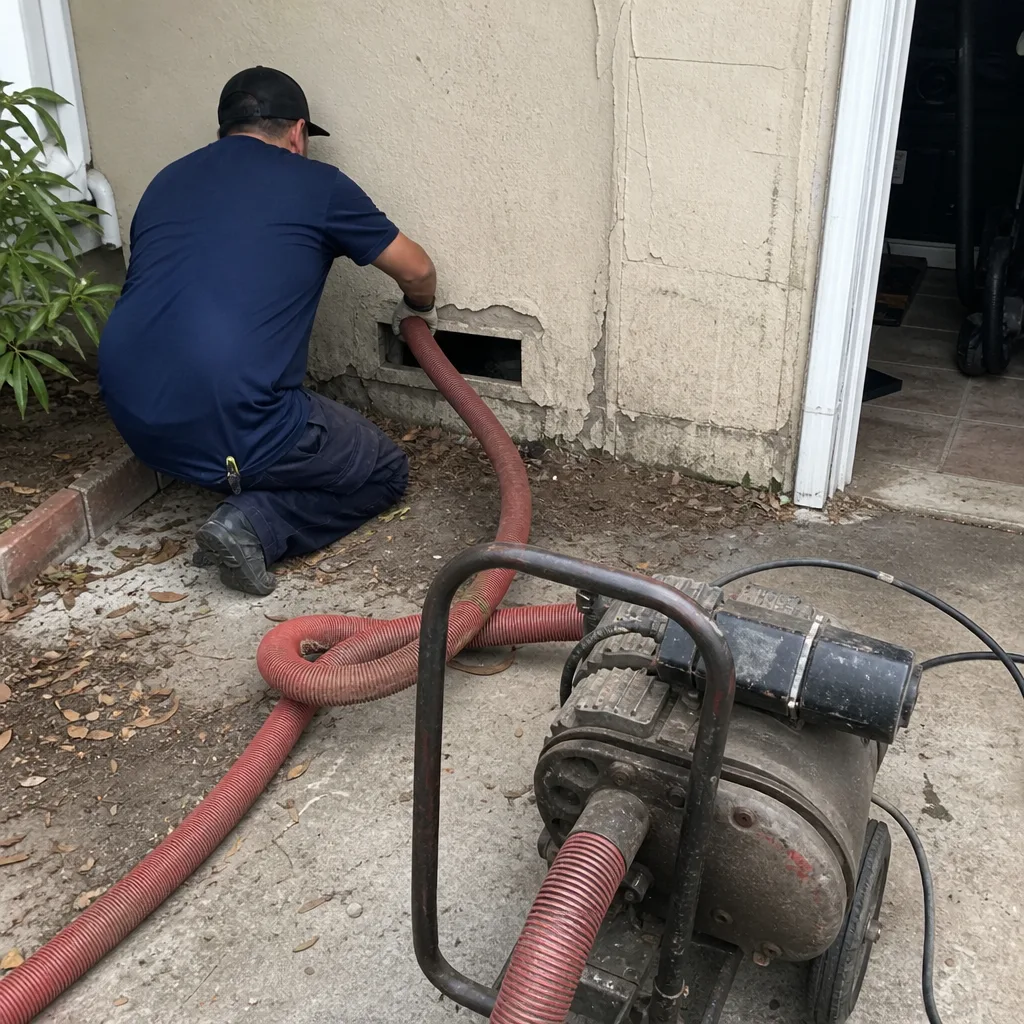 Before
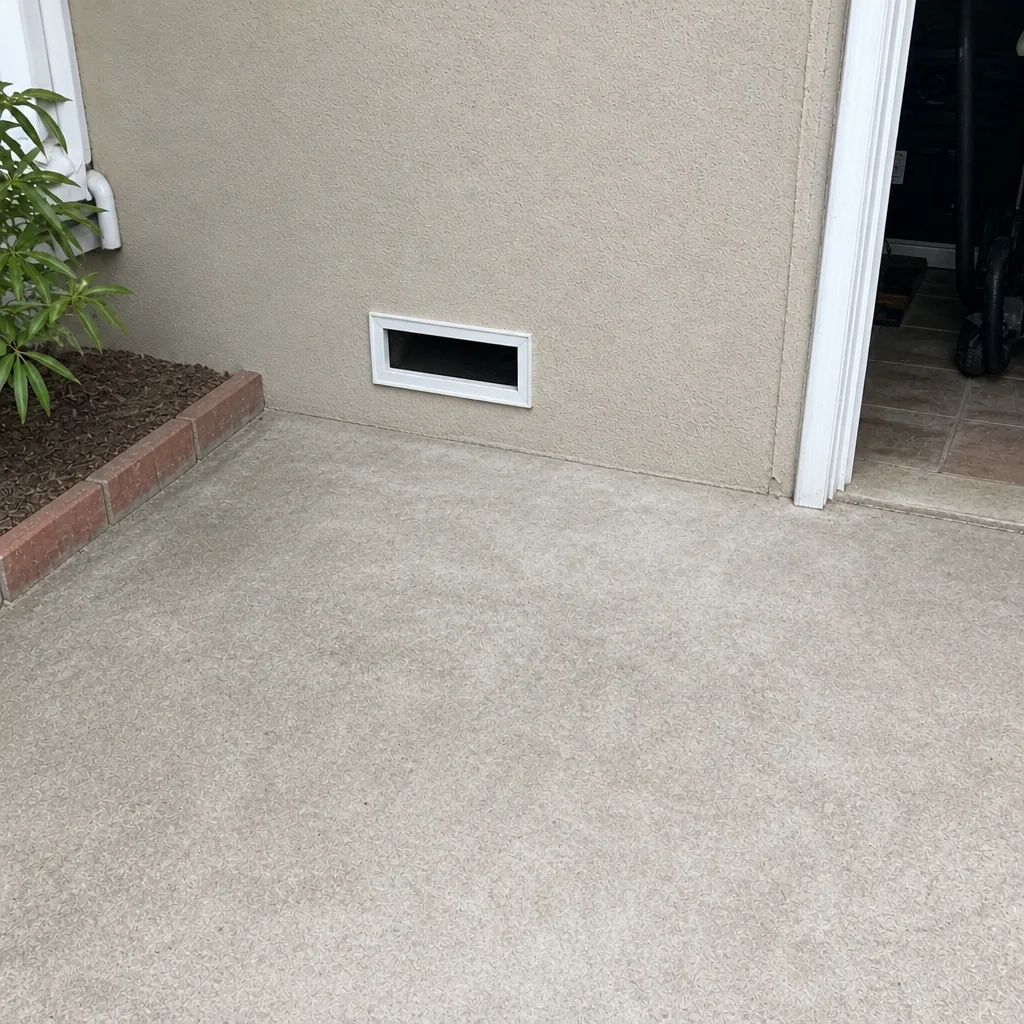 After
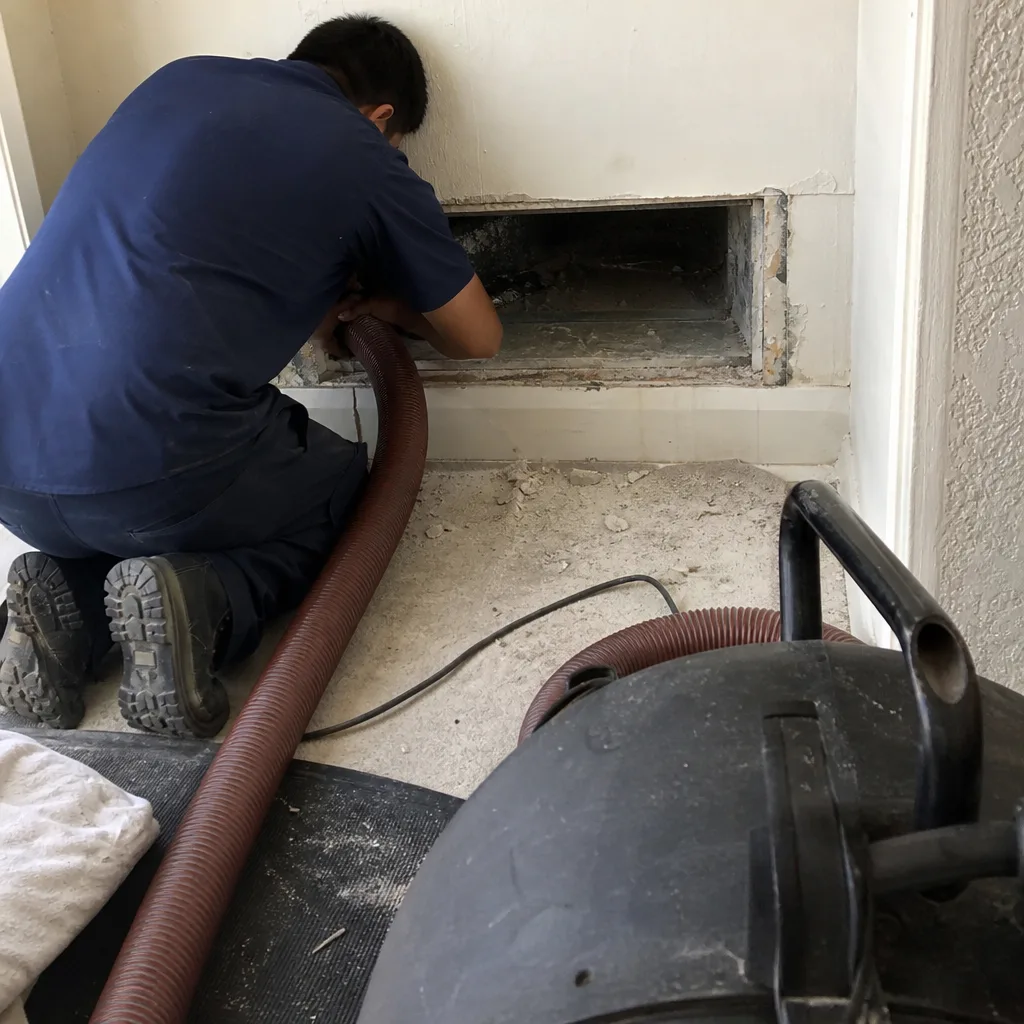 Before
 After
 Before
 After
When to Call a Professional
If any scenario on the list above sounds familiar, the smart next step is a professional evaluation. Persistent odors, visible growth in a duct, a post-renovation mess, a wind event that coated the house, or a dryer vent that’s overdue all point in the same direction. The evaluation should be free, the estimate should be in writing, and the price should be a flat rate per system agreed before any work begins. Our technicians use professional-grade Rotobrush and Nikro cleaning systems with Abatement Technologies air-quality equipment, and they can handle cleaning, repair and sealing, and sanitizing in one visit. Huntington Beach Air Duct Cleaning Pros offers free estimates in Huntington Beach – call (866) 937-7145. We answer 24/7. Fast dispatch from 7am to 7pm, Sunday through Friday.
Frequently Asked Questions
Most Huntington Beach homes do well with a professional cleaning every two to three years, with the annual evaluation and your ongoing log deciding the exact timing. Homes with pets, recent renovations, or a history of heavy dust after wind events should consider a shorter interval. The log is what lets you justify a shorter interval to yourself, honestly, rather than guessing.
A filter change removes particulate at the air handler; duct cleaning removes accumulated debris from the inside of the duct runs. They solve different problems. A clean filter over dusty ducts still circulates dust, and a freshly cleaned duct system with a neglected filter will foul faster than it should. Both belong on your checklist.
Fast-returning dust usually means the source is upstream: a leak drawing in outside air, a filtration gap, or debris already inside the ducts. Confirm by checking a second register; if two or more are returning dust quickly, schedule a professional inspection. Do not keep wiping the same grille; it won’t fix the source.
Sealing is worth it. Cleaning removes what’s there; sealing keeps new debris from getting in and stops the conditioned-air loss that costs you on airflow and energy. Cleaning, repair and sealing, and sanitizing in one visit is the more durable result than cleaning alone. In most Huntington Beach homes we see, the leaks are at the joints and boots, and they’re straightforward to close.
A shop vac can reach a register and the immediate duct around it, but it cannot reach the length of the duct run, the trunk lines, or the tight bends where debris collects. The professional equipment that does the job (Rotobrush and Nikro systems) relies on contact cleaning and negative pressure, not just suction at the opening. For a full cleaning, book the professional job.
Yes: change the filter the same day or the next, check the return grille for a film that looks oilier than normal, and inspect a couple of supply registers. If the smoky smell remains after a filter change, the ducts are holding residual particulate and a professional cleaning is warranted. Log the event in your notes so you can see patterns over the year.
Ask for before-and-after photos of your own ducts. A real cleaning leaves visual evidence: the register and duct surfaces, the filter, and the trunk line. Combine those photos with a written scope and a flat price agreed beforehand, and you have the documentation that a coupon service rarely provides. The same standard applies to dryer vent and furnace work, which is why the equipment used matters as much as the price.
The Bottom Line
A duct maintenance checklist earns its keep only if it fits your actual house and you actually use it. That means three rhythms – a monthly filter and register check, a quarterly flashlight-and-notes inspection, and an annual professional evaluation – plus a simple log you keep up with. Read your registers instead of just wiping them. Pay attention to the dryer vent. Schedule professional work when your log shows a pattern, not when the dust gets embarrassing. And when you book that work, insist on a flat price per system agreed before anyone starts, professional equipment on site, and the option to repair and seal what a cleaning uncovers. That’s how a checklist turns into a home that stays clean.
For a full system evaluation and honest pricing on cleaning, repair and sealing, and sanitizing, call Huntington Beach Air Duct Cleaning Pros at (866) 937-7145 for a free estimate. We answer 24/7. Fast dispatch from 7am to 7pm, Sunday through Friday. For an overview of everything we do, start with Huntington Beach Air Duct Cleaning Pros.
Written by the team at Huntington Beach Air Duct Cleaning Pros.